Membrane Process Engineering for Industrial Process Development and Scale-Up
Specialized in membrane process engineering, scale-up and industrial system integration.
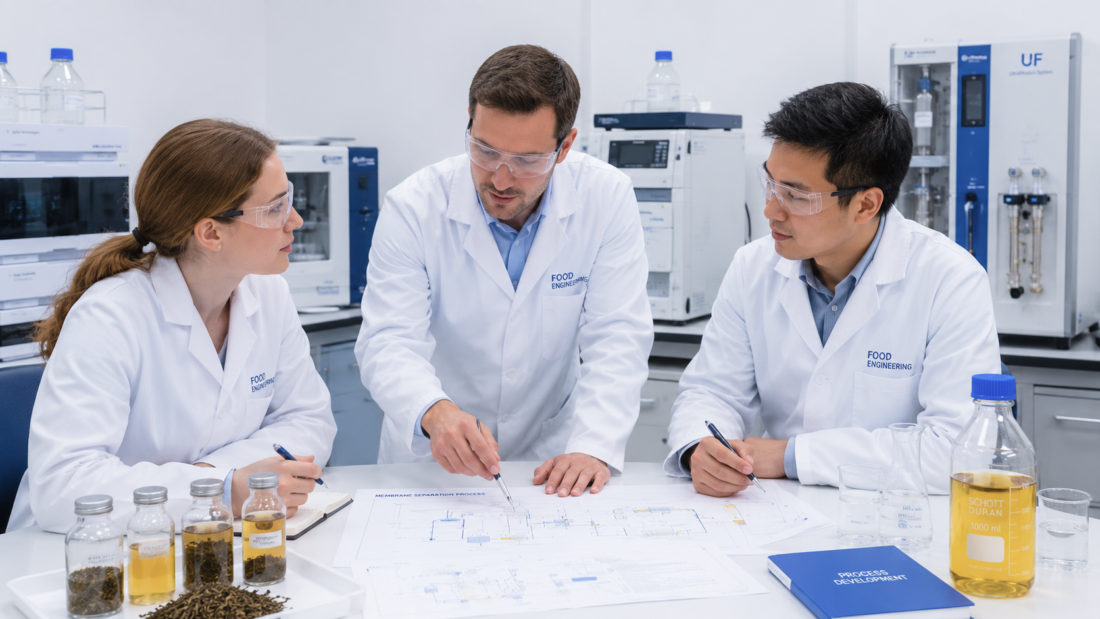
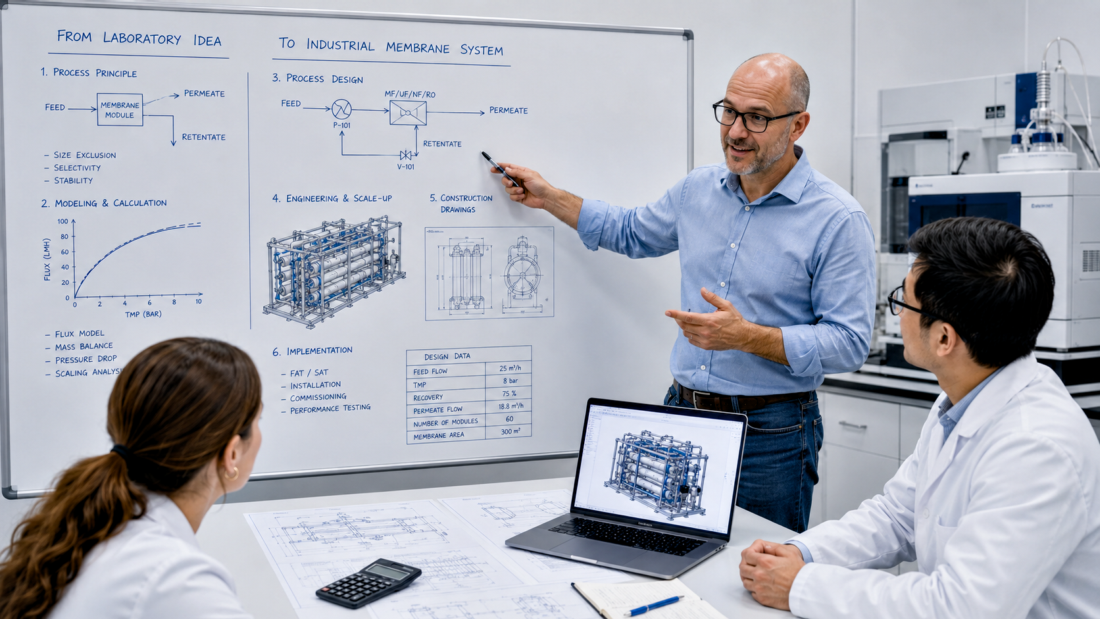
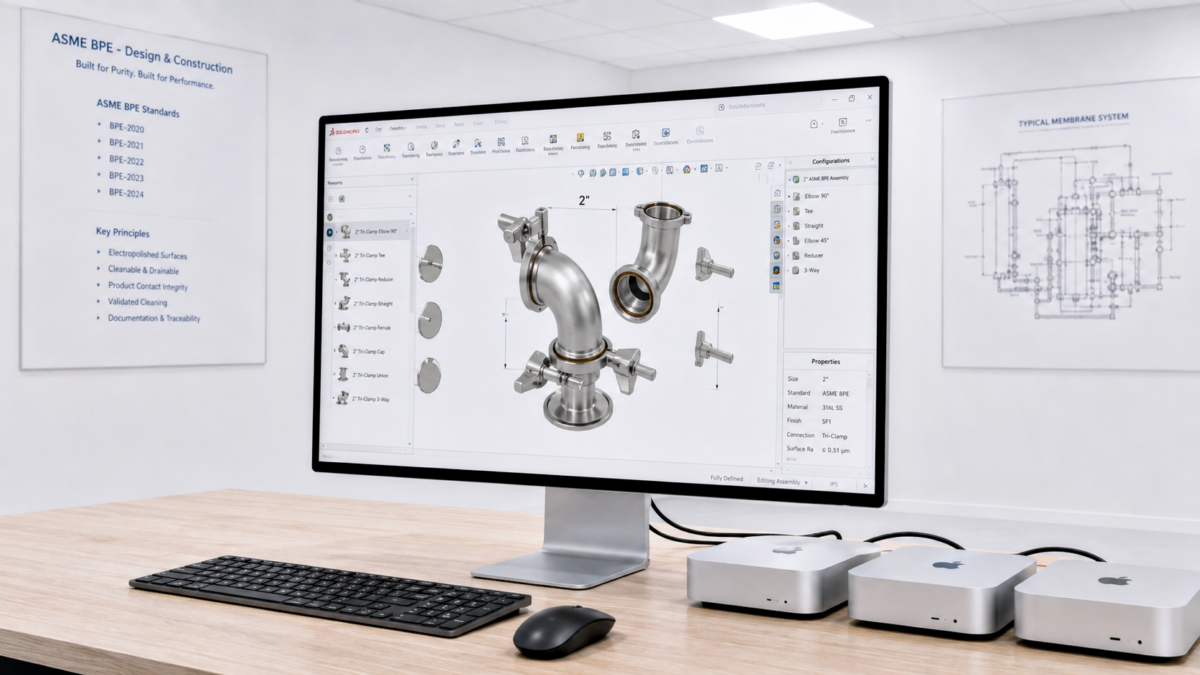
Messinger Engineering specializes in membrane process engineering, membrane process development, and membrane system design for the food, biotechnology, and chemical industries. We support companies from laboratory experiments through pilot-scale development and industrial scale-up to the design of complete membrane filtration systems. Our expertise includes ultrafiltration (UF), microfiltration (MF), nanofiltration (NF), reverse osmosis (RO), process optimization, membrane plant engineering, and industrial process scale-up.
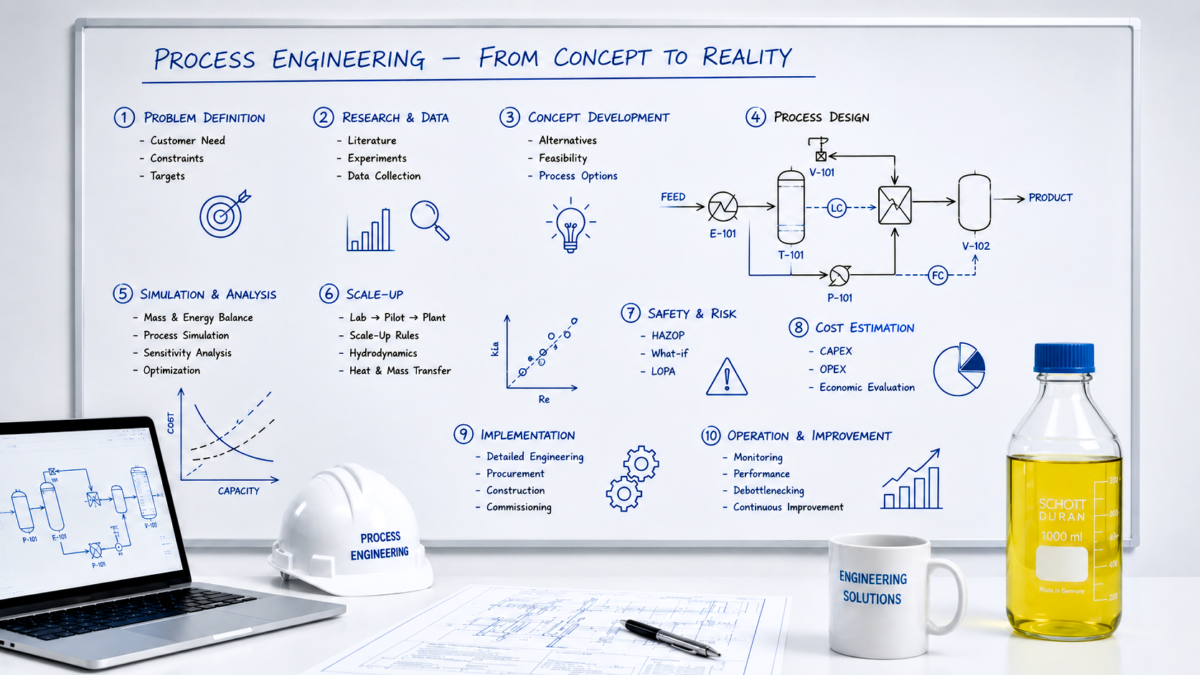
Every new industrial process begins with a specific engineering question. A valuable molecule may need to be recovered from a fermentation broth and delivered at high purity. At the start, however, the right process route is often unclear.
Process Scaling Engineering
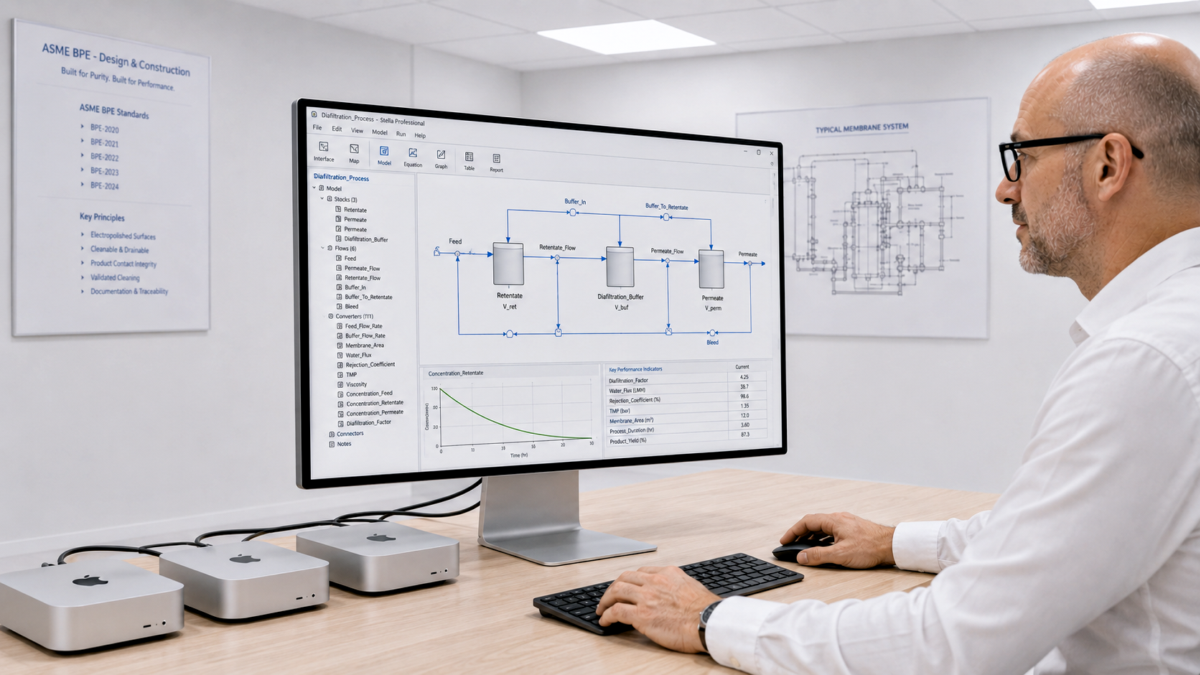
Process Scaling Engineering (PSE) describes a focused engineering discipline for developing methods, scale-down systems, modular laboratory and pilot platforms, and software-supported development tools. Its purpose is to investigate industrial processes with high engineering value and minimal experimental effort. PSE generates the Engineering Knowledge required for scale-up, plant design, process optimization, and data-driven or AI-assisted process development.
Is microfiltration sufficient, or is ultrafiltration required?
Will chromatography be necessary, or can precipitation achieve the target?
Which membrane is best suited for the separation?
Which pressures, crossflow velocities and concentration ranges lead to an economically viable process?
Which data are actually needed to scale the process reliably to industrial production?
The challenge is not to run as many experiments as possible. The real objective is to gain the right engineering data with the fewest possible trials, within the practical constraints of time, personnel and budget. These data are essential for selecting unit operations, designing process steps and preparing reliable scale-up.