Stirred Cell Membrane System for Flat-Sheet Membrane Testing and Process Development
Crossflow Membrane Filtration with the HEXAMEM Stirred Cell
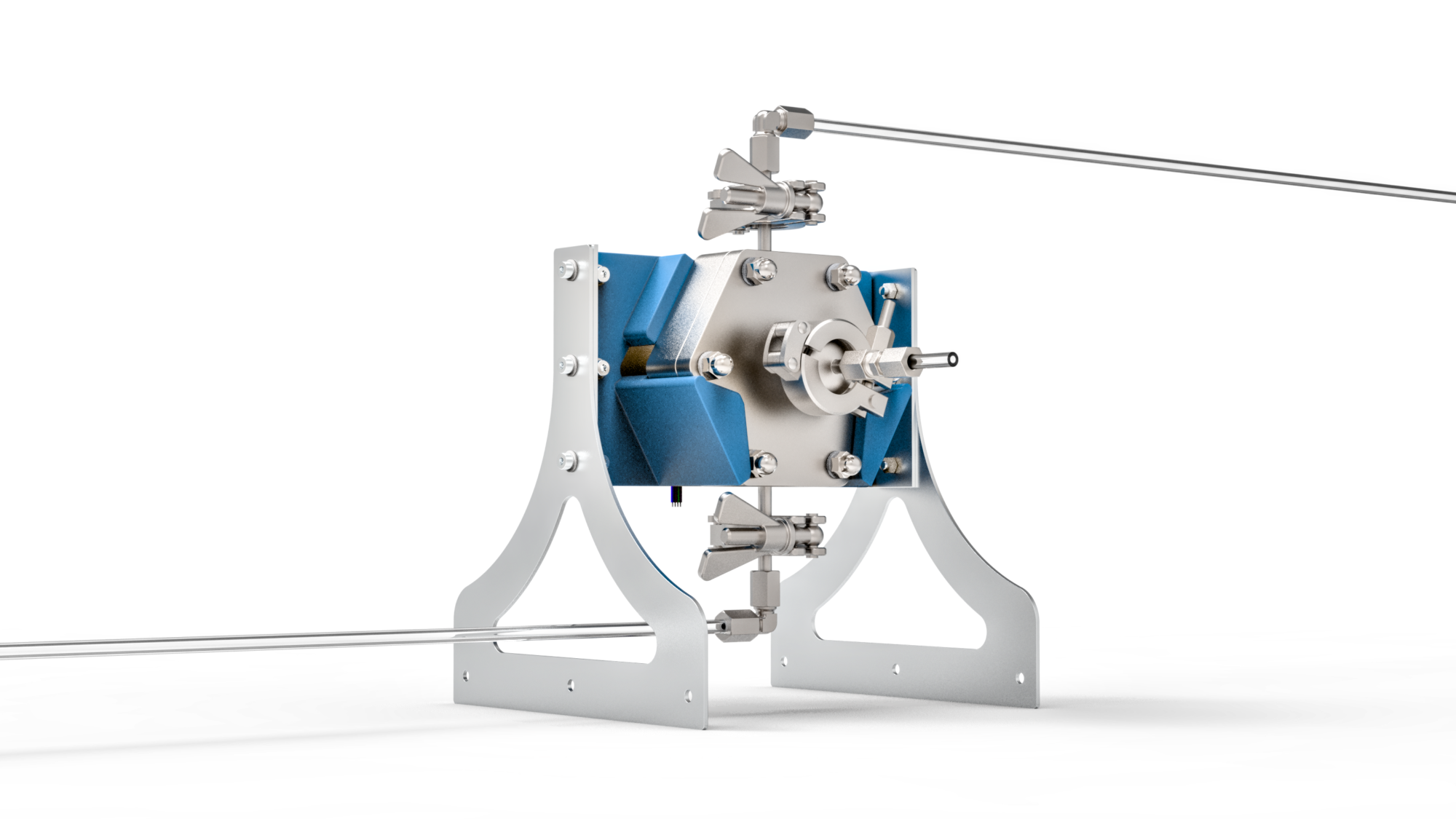
One platform for membrane selection, fouling analysis, cleaning optimization and membrane process development.
The HexaMem stirred-cell membrane system is a laboratory membrane filtration system for membrane screening, membrane process development and flat-sheet membrane testing. It enables highly reproducible experiments with Microfiltration (MF), Ultrafiltration (UF), Nanofiltration (NF) and Reverse Osmosis (RO) membranes using only 500 mL of sample, making it ideal for the food, biotechnology and chemical industries. Researchers and process engineers can evaluate membrane flux, retention, fouling, cleaning and separation performance under controlled hydrodynamic conditions before pilot-scale or industrial process development.
- Screen and compare multiple flat-sheet membranes using identical operating conditions
- Generate permeate and retentate samples for analytical and process development studies
- Reduce sample consumption, laboratory time and development costs
- Generate engineering data for process optimization, scale-up and industrial membrane system design
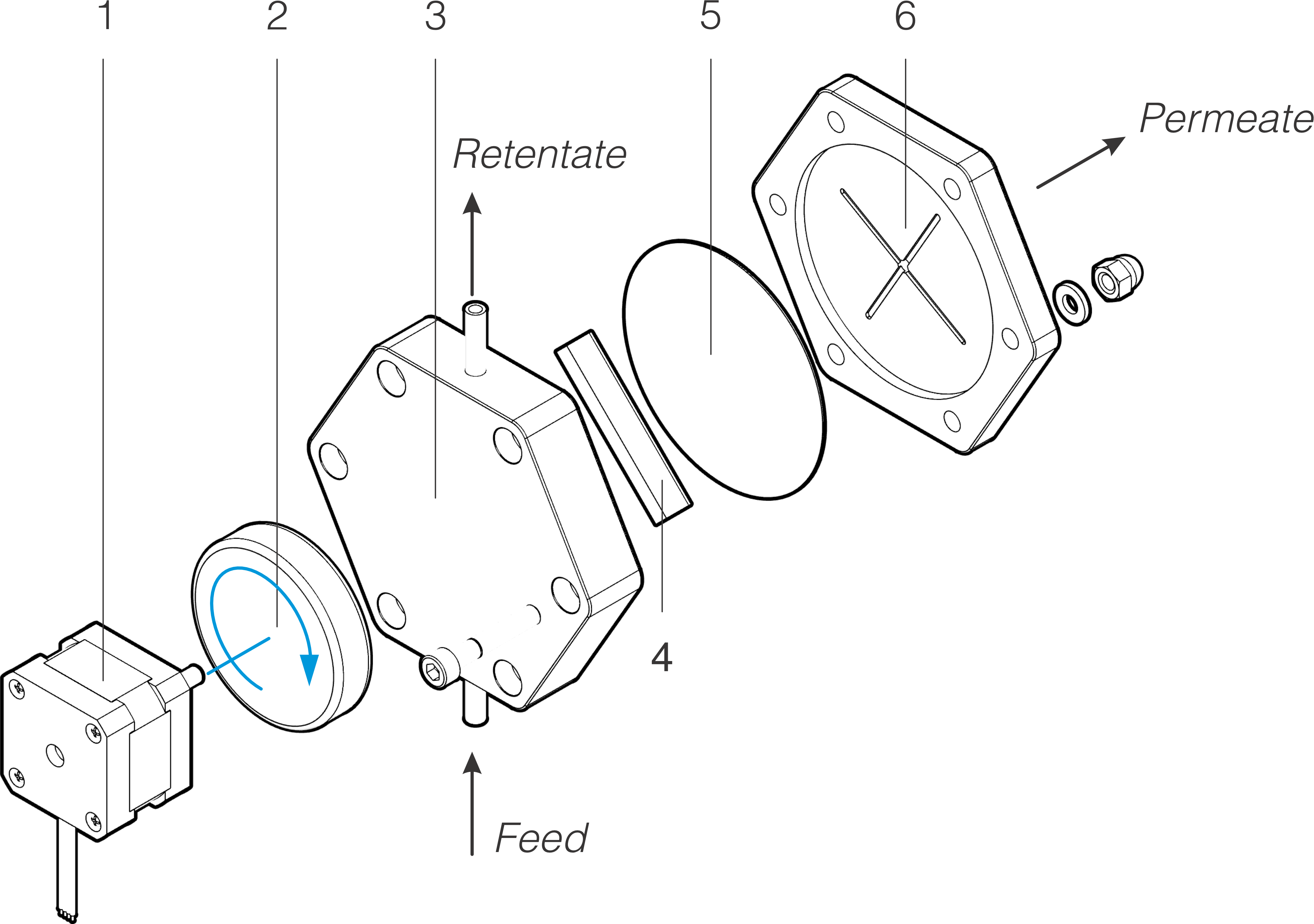
1 = Stepper Motor
2 = Magnetic Disc Drive
3 = Hexamem Body
4 = Stirrer
5 = Membrane
6 = Hexamem Permeate Body
A programmable stepper motor drives a magnetically coupled rotor to create controlled crossflow conditions directly above the membrane.
Applications
- Membrane screening
- Flux and retention testing
- Protein concentration
- Fermentation broth clarification
- Enzyme membrane reactors
Evaluate microfiltration, ultrafiltration, nanofiltration and reverse osmosis membranes under identical laboratory conditions. HexaMem enables rapid membrane screening for membrane process development, membrane selection and process optimization.
Measure membrane flux, permeate productivity and solute retention with high reproducibility. The stirred-cell membrane system generates reliable filtration data for membrane comparison, process design and scale-up.
Develop efficient ultrafiltration processes for concentrating proteins, enzymes and other valuable biomolecules. Optimize operating conditions while maximizing product recovery and minimizing membrane fouling.
Investigate membrane filtration of fermentation broths before downstream purification. Evaluate membrane performance, permeate quality and filtration behavior using only small laboratory sample volumes.
Study enzyme membrane reactor processes by retaining enzymes while continuously removing reaction products through the membrane. HexaMem supports research on biocatalysis, enzyme recycling and continuous membrane reactor operation.
- Membrane fouling studies
- Cleaning optimization
- Process feasibility studies
- Scale-up investigations
- Process development
Analyze membrane fouling mechanisms under controlled pressure, stirring speed and operating conditions. Compare membranes, feed streams and operating parameters to improve long-term membrane performance.
Develop and validate membrane cleaning procedures using realistic laboratory filtration experiments. Compare cleaning chemicals, temperatures and operating conditions to restore membrane permeability efficiently.
Determine whether membrane filtration is technically and economically suitable for a specific separation task. Generate engineering data that supports process selection before pilot-scale investment.
Generate laboratory data that supports membrane process scale-up and industrial equipment design. Understand process limitations, operating windows and critical parameters before pilot plant construction.
Use HexaMem to develop robust membrane filtration processes for the food, biotechnology and chemical industries. The system produces engineering knowledge required for process optimization, industrial scale-up and successful commercial implementation.
Complete specifications, operating principles, membrane compatibility and laboratory applications. Tube-in-Tube Cooler and Heater – Technical Datasheet (PDF)
Temperature control accessory for membrane filtration, enzyme membrane reactors and process development. Pressure Vessel Dosing System – Technical Datasheet (PDF)
Pressurized feed vessel for controlled dosing, concentration experiments and membrane filtration studies.
Controlled Shear
Reproducible hydrodynamic conditions for reliable membrane experiments.
“How does shear influence membrane performance and fouling?”
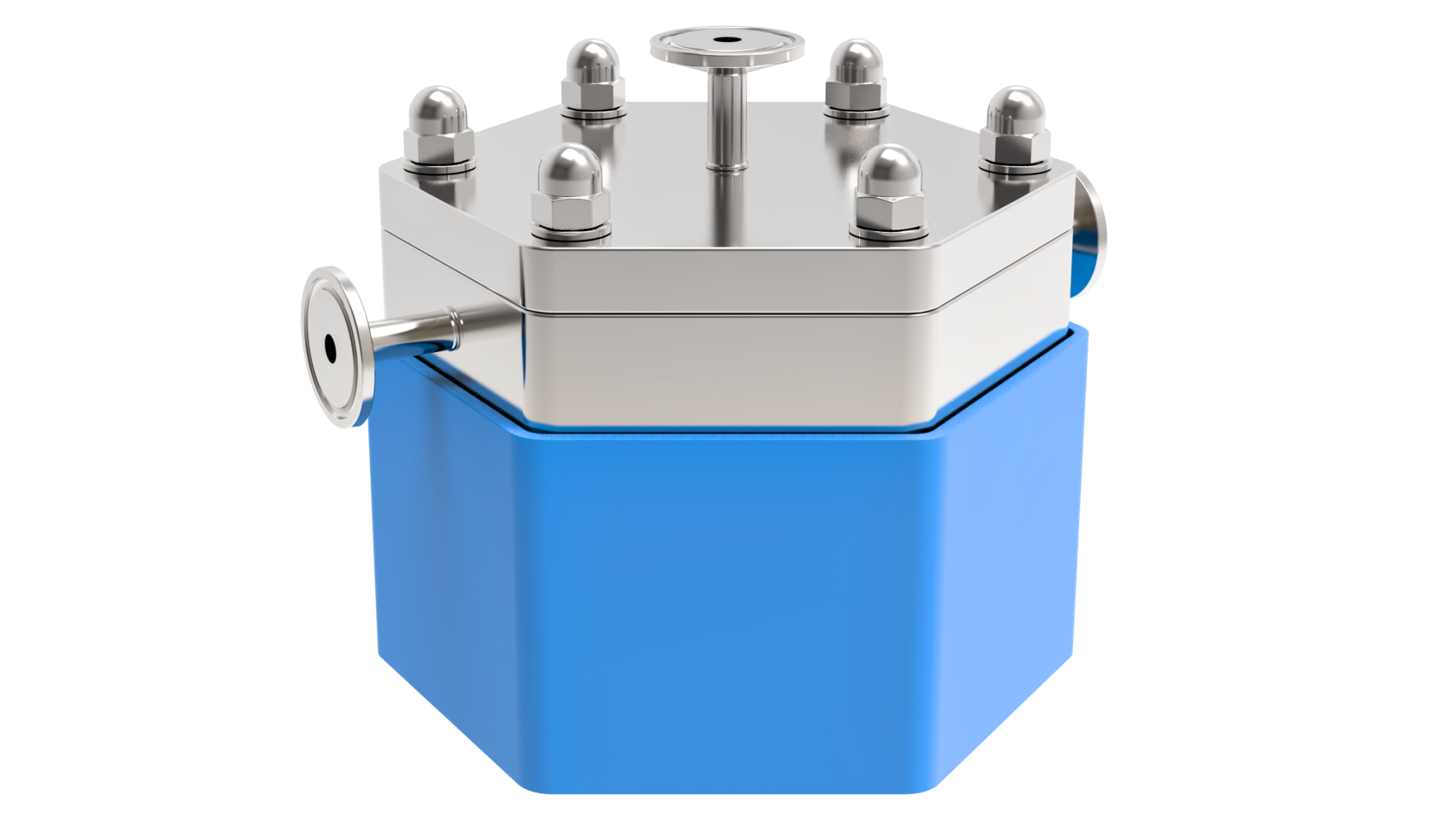
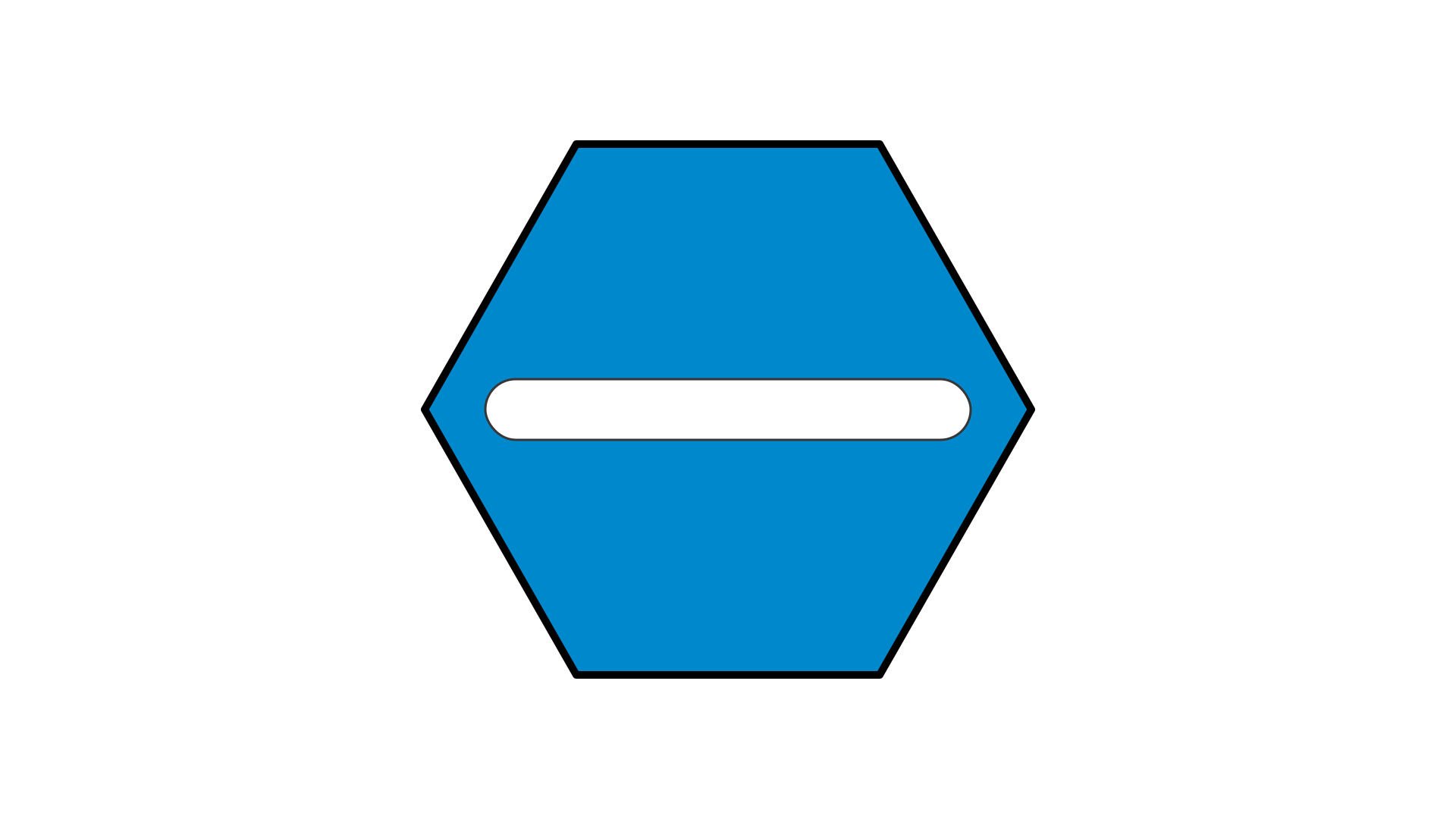
The HexaMem hexagonal chamber suppresses liquid co-rotation and promotes controlled mixing directly above the membrane surface. A magnetically driven rotor produces reproducible shear conditions for membrane screening, flux measurements, retention studies and fouling experiments.
Rotor geometry, stirring speed and acceleration profiles can be adapted to product viscosity, rheological behavior and shear sensitivity. This allows process engineers to investigate hydrodynamic effects and generate reliable engineering data for membrane process development and industrial scale-up.
- ✓ Controlled shear at the membrane surface
- ✓ Independent stirring speed and acceleration profiles
- ✓ Adaptable rotor designs for different products
- ✓ Reproducible hydrodynamic conditions for membrane research
- ✓ Engineering data for process optimization and scale-up
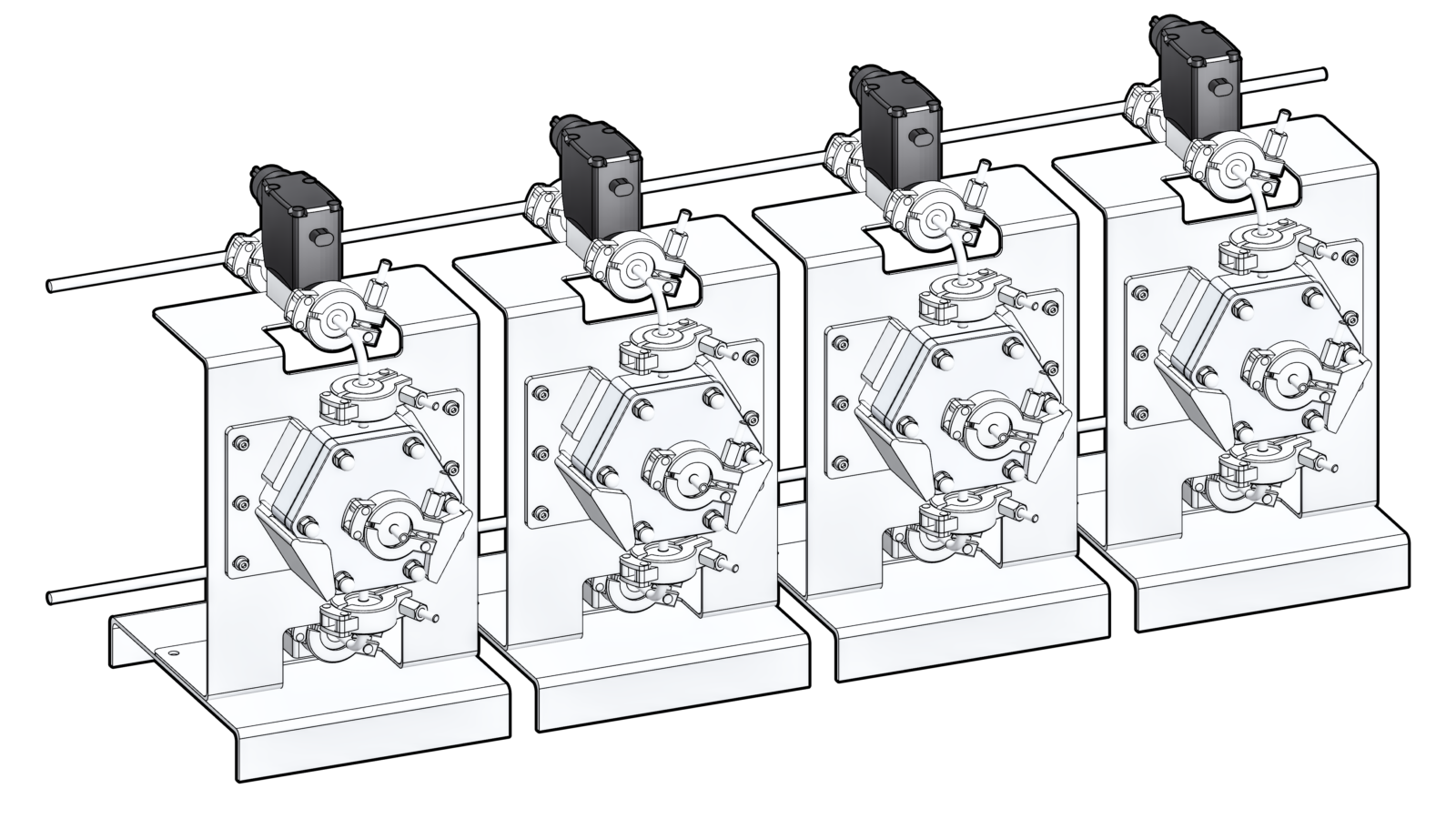
Parallel Membrane Testing
Compare multiple membranes in a single experiment.
“Which membrane delivers the best overall process performance?”
HexaMem allows multiple flat-sheet membranes to be tested simultaneously under identical operating conditions. Compare membrane flux, solute retention, fouling behavior and cleaning performance while eliminating variations between separate laboratory experiments.
Each stirred cell can be operated with an independent stirring speed, enabling controlled hydrodynamic conditions and investigation of shear effects on membrane performance. Automated operation generates reproducible engineering data for membrane selection, process optimization and industrial scale-up.
- ✓ Compare multiple membranes in one experiment
- ✓ Independent stirring speed for every membrane cell
- ✓ Evaluate flux, retention, fouling and cleaning simultaneously
- ✓ Eliminate experimental variation between separate tests
- ✓ Generate reproducible engineering data for process development and scale-up
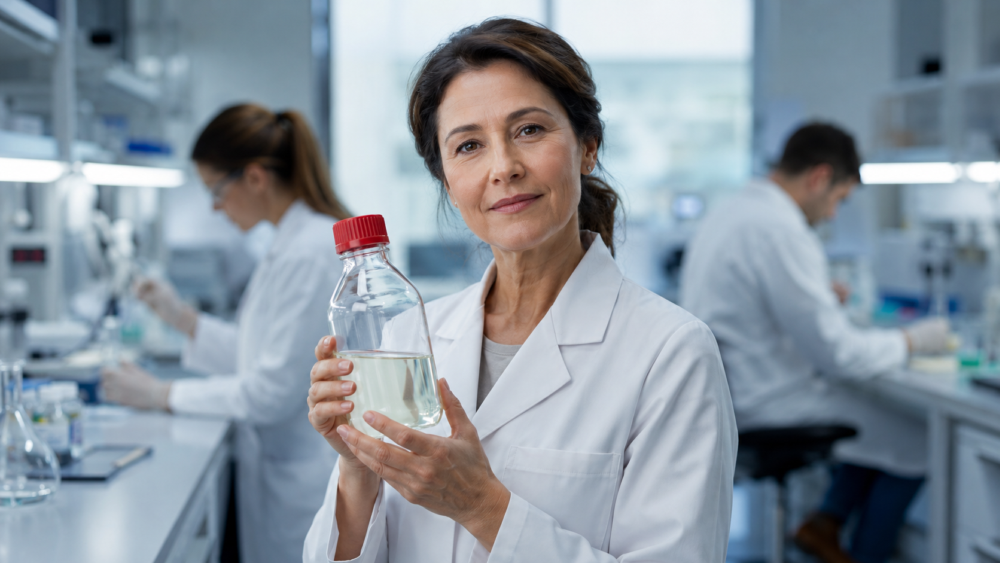
Small-Batch Processing
Generate membrane process data without wasting valuable product.
“I cannot afford to waste this material.”
HexaMem is designed for laboratory membrane testing with limited, rare or expensive samples. It enables membrane screening, flux testing, retention studies and sample generation using only small feed volumes.
Obtain permeate and retentate samples while conserving valuable product for further analysis, formulation work and membrane process development.
- ✓ Product concentration
- ✓ Purification and fractionation
- ✓ Process feasibility studies
- ✓ Sample generation for analytical testing
- ✓ Scale-up relevant data acquisition
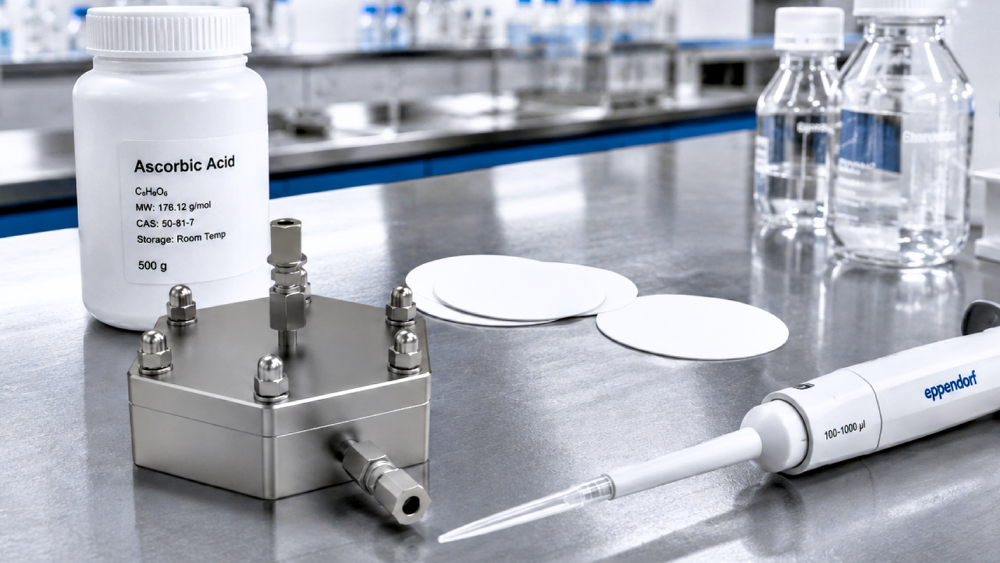
CIP – Cleaning Optimization
Develop the most effective membrane cleaning protocol.
“Which cleaning procedure restores membrane performance most effectively?”
HexaMem enables reproducible membrane fouling and controlled cleaning studies using multiple flat-sheet membranes in parallel. Cleaning performance is quantified through permeability and flux recovery measurements before and after each cleaning cycle.
Compare cleaning chemicals, concentrations, temperatures and Cleaning-In-Place (CIP) procedures side by side to identify the most efficient cleaning strategy while minimizing downtime and chemical consumption.
- ✓ Compare multiple cleaning protocols in one experiment
- ✓ Quantify permeability and flux recovery
- ✓ Evaluate cleaning chemicals, concentrations and temperatures
- ✓ Investigate reversible and irreversible membrane fouling
- ✓ Optimize Cleaning-In-Place (CIP) procedures before scale-up

Enzyme Membrane Reactors
Combine enzymatic reaction and membrane separation in a single process.
“How can I increase conversion while continuously recovering the product?”
HexaMem enables laboratory-scale investigation of enzyme membrane reactors (EMRs), where enzymatic conversion and membrane separation occur simultaneously. The system allows process engineers to evaluate enzyme retention, substrate conversion, product recovery and membrane performance under well-controlled operating conditions.
By retaining enzymes while continuously removing reaction products, HexaMem supports the development of efficient biocatalytic membrane processes with minimal sample consumption. The resulting engineering data provide the foundation for process optimization and industrial scale-up.
- ✓ Protein hydrolysis and peptide production
- ✓ Lactose hydrolysis and bioconversion processes
- ✓ Enzyme retention and continuous product removal
- ✓ Biocatalytic membrane process development
- ✓ Engineering data for membrane reactor scale-up
Frequently Asked Questions
Tools for R&D in the Membrane Lab
Complementary laboratory equipment for membrane testing, process development and automated experiments.
Automated Sampler →
Balances →
Ceramic Membrane Benchtop System →
Laboratory Pumps →
Level Switch →
Pervaporation Laboratory System →
Pilot Plants →
Stirred Cell Membrane Systems →